Between The Matrix and Her
Why BCI is not about reading minds, but about giving AI a better way to listen

Most people still picture brain-computer interfaces (BCI) as Neo plugged into the construct in The Matrix: a direct, high-bandwidth connection where a machine can read or write an entire mental state. That familiar image has shaped both the excitement and disappointment around the field. We have seen remarkable laboratory demonstrations and a small number of clinically meaningful breakthroughs, but also years of products running into the gap between detecting a neural signal and turning it into a useful everyday interface.
I think the more interesting long-term image is Theodore walking through the city with Samantha in his earpiece in Her: software that is constantly present and sufficiently contextual that it does not need to wait for an explicit command every time. As AI moves from software that waits for instructions to systems that propose, draft, search, negotiate and increasingly act on our behalf, the interface problem begins to change. The scarce resource is no longer only model capability. It is the quality of the feedback loop between the human and the agent.
Can the system recognize that it has misunderstood us, that our attention has broken, that something feels wrong, or that we want control back — before we have to interrupt what we are doing and explicitly tell it?
Today, that loop is primitive. A user types a correction, clicks an option, abandons a task, or says “no.” The system largely observes our reaction after the fact. It does not know whether we understood an output, noticed an error, became confused, recognized something important, intended to intervene, or simply did not have time to respond.
This is where neural signals become interesting. If they can be captured reliably and with consent, they may eventually expose parts of that feedback loop earlier and with greater information density. Not the entirety of cognition. Not a stream of someone’s internal monologue. Something narrower, and potentially much more useful: a measurement layer for latent human state.
The near-term commercial opportunities will likely remain clinical and workflow-specific. The long-term prize is a new interface primitive for accessibility, adaptive software and agent supervision. One that helps software understand not only what we explicitly tell it, but when it should ask, verify, slow down or return control.
What we saw before: the brain was measurable, but not productizable
Earlier waves of consumer BCI did not stall because the brain contained no usable signal. They stalled because that signal was expensive to collect, highly person-specific, unstable over time, and difficult to connect to a task with enough economic value.
The brain is not a database waiting to be queried. Every non-invasive sensor observes a lossy physical projection of neural activity. Scalp EEG sees electrical fields after they have passed through brain tissue, skull and skin. The signal is spatially mixed, noisy and vulnerable to motion, impedance, muscle activity and environmental artefacts. There is no unique reverse calculation from that surface measurement back to the exact neurons that generated it. Better neural networks cannot recreate information the sensor did not capture in the first place.

That matters because many historical BCI claims quietly moved from one problem to another. Detecting whether a trained participant is looking at a flashing visual target is real. Distinguishing a small set of imagined motor commands under controlled conditions is real. Inferring open-ended semantic content, in a new user, on a consumer device, while they walk around their day, is a different order of problem.
The results that matter most today are therefore not consumer demos. They are the clinical studies where the benefit of even partial decoding is immediate. Intracortical systems have enabled people with paralysis to communicate through attempted handwriting or speech. One Nature study reported speech decoding at 62 words per minute over a 125,000-word vocabulary, albeit in one participant, with substantial daily calibration and an implanted array. ECoG work has separately demonstrated high-speed speech decoding in tightly defined clinical settings.
The point is not that these are already mass-market products. They are not. The point is that the information exists. When one can record close enough to the source, constrain the task enough, and tolerate surgical and calibration burden, neural decoding stops looking like science fiction.
That is why Neuralink, Synchron, Precision Neuroscience and Paradromics are all important, even though they are pursuing different technical bets. Neuralink is maximising bandwidth through intracortical recording. Synchron is attempting a less invasive endovascular path. Precision is pursuing high-density cortical surface recording. None has solved general human-computer interaction. But collectively they demonstrate that the first valuable market is not “thought as a product.” It is restoring agency where conventional interfaces have failed.
The non-invasive side tells the opposite but equally valuable story. Consumer EEG has made sensors cheaper and more accessible, but has not eliminated the economics of noise. A recent real-world comparison found that several consumer devices required long temporal smoothing windows to achieve usable workload measures, precisely the trade-off that makes an apparently real signal hard to turn into a responsive interface. The sector’s historical problem was therefore not a lack of algorithms alone. It was a full-stack gap: sensor quality, protocol design, labelled data, transfer across people, and applications where imperfect inference still creates value.
What has changed: the field is beginning to accumulate the ingredients, not the answer
The relevant change is not simply that deep learning has arrived in EEG. Deep learning has been applied to biosignals for years. The change is that several previously separate curves are starting to meet.
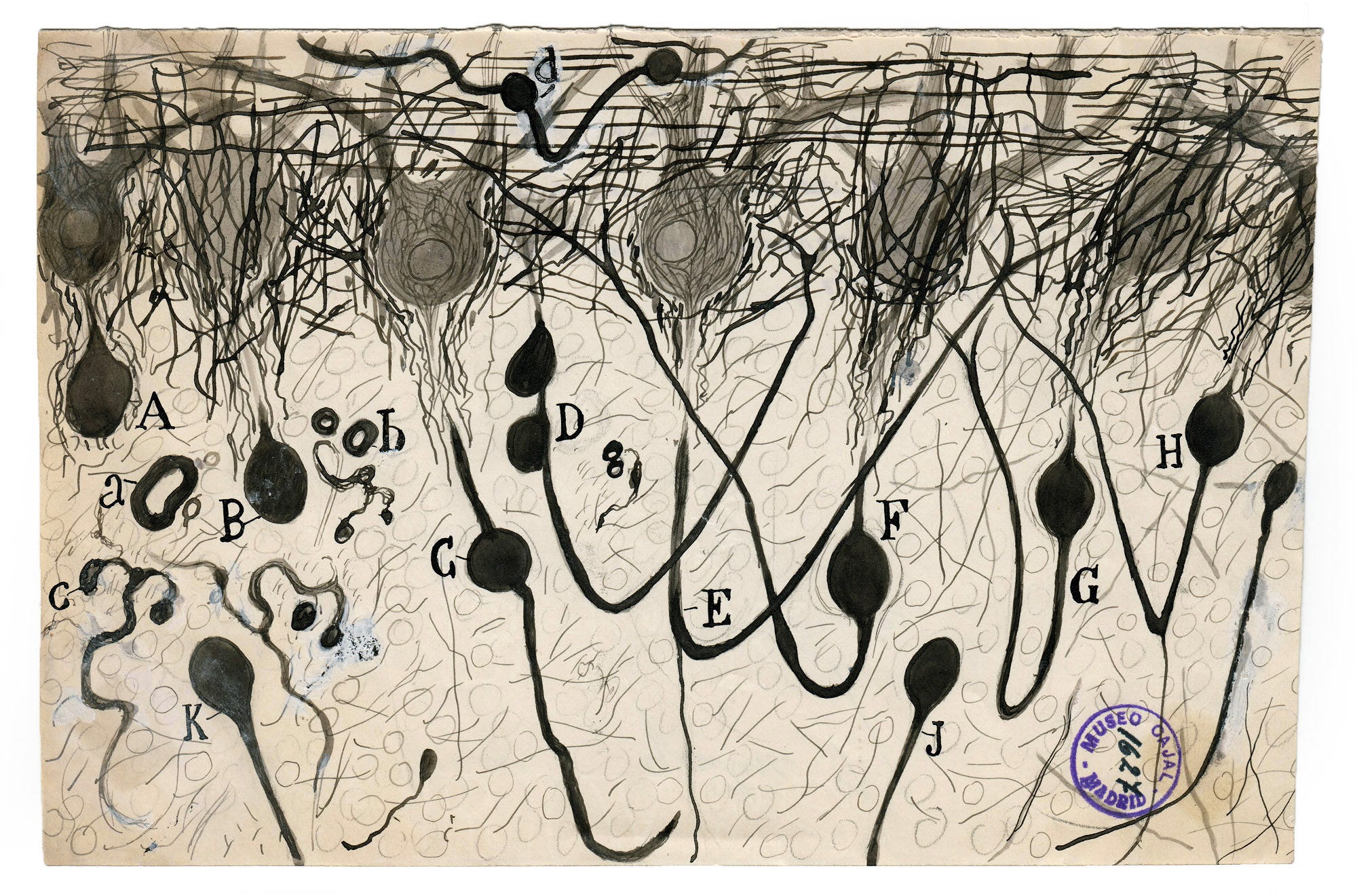
First, representation learning has changed what can be done with weakly labelled, noisy and multimodal data. Computer vision did not become infrastructure because a single classifier got better. It became infrastructure because image data, compute, self-supervised pretraining, synthetic augmentation, tooling and deployment feedback reinforced each other. The same pattern is emerging in smaller form in biology, robotics and healthcare: the initial model is rarely the moat; the data-collection and evaluation system that compounds around it often is.
Neural data could follow part of that path. Modern self-supervised models can learn temporal and spectral structure from recordings without requiring every second of data to be manually labelled. Multimodal supervision can connect a neural trace to an image, an audio stream, a motor action, an eye movement or a downstream decision. Foundation models for EEG are now being trained on datasets that are orders of magnitude larger than traditional lab studies. But it would be a mistake to call this an LLM-style scaling law. The evidence for clean performance scaling, particularly across new people, devices and real-world sessions, remains weak and uneven.
Second, the hardware curve is finally broad enough to support data operations. There are now more wearable form factors, better dry and semi-dry electrodes, lower-cost amplifiers, and a growing installed base of research and consumer devices.
That does not mean the hardware problem is solved. Someone who spent years working with EEG described the experience to me recently by pointing to this exact scene. Put a wet EEG cap on someone, especially someone with hair, and suddenly you are dealing with electrode contact, gel, setup time, movement, sweat and all the small things that make a lab setup very different from something you would casually use every day. His joke was that we still look a little too much like Doc Brown when Marty first knocks on his door.
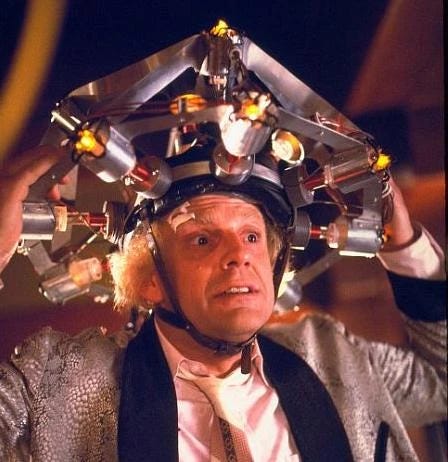
I thought it was funny, but also pretty accurate. The models may be moving quickly, while the physical experience of using the technology still has a long way to go. That is why the breakthrough may not arrive as one perfect headset. It may come from software getting much better at extracting useful signal across different devices while the hardware gradually becomes less intrusive.
Third, AI itself has created the application pull. In the old interface model, better neural sensing competed with the keyboard, touch screen, voice and eye tracking. Those are excellent interfaces, and neural data will not displace them for most tasks. In an agentic model, however, the question becomes different: how does a system know when it should escalate to the human? How does it learn that its suggested action feels wrong before a costly failure occurs? How does it distinguish a user who is merely inactive from one who is confused, overloaded, disengaged or ready to approve?
An agent supervising a financial model, clinical workflow, industrial system or defence operation does not necessarily need to decode a sentence in the operator’s head. It may benefit enormously from a robust error-recognition, attention or confidence signal. A single binary signal can be worth more than a rich but unreliable interface if it arrives at the right moment in a high-consequence workflow. The same is true for accessibility. A person with limited speech or motor control does not need a general neural operating system on day one; they need a channel that gives them more agency than the alternatives.
I find it more useful to think about BCI as a closed-loop system. Early autonomous systems mostly collected information and surfaced it to an operator. Better systems learned when they were uncertain, when to ask for intervention, and how to improve from the feedback that followed.
BCI could eventually play a similar role between humans and increasingly capable software: infer a limited human state, understand how confident that inference is, and ask for correction when it gets it wrong. The value is not that the system always knows what a person is thinking but the feedback loop becomes faster and richer than waiting for someone to type, click, or explicitly intervene.
The future interface is likely to be ambient, not theatrical

Five years from now, I do not expect consumers to be wearing headsets to dictate emails by imagination. There will be plenty of demos, but that is not the base case.
I do expect specialized systems to start demonstrating that neural signals can improve a closed-loop workflow where existing telemetry is insufficient: assistive communication, neurorehabilitation, sleep and seizure monitoring, CNS trials, operator training, and selected high-stakes human-in-the-loop environments. The winning product will be the one that detects a meaningful signal early enough to change the system’s behaviour before the human has to correct it explicitly.
The proof standard should be simple: does the neural signal create measurable incremental lift versus voice, eye tracking, clickstream data, physiological sensors and a good product design? If not, it is a feature without a market. If it does, it begins to earn a place in the software stack.
A decade out, the more interesting possibility is that agentic software acquires a new class of human feedback. Today, RLHF and preference optimization largely rely on explicit rankings, written corrections and behavioural proxies. These signals are useful, but they remain relatively sparse and are mediated through an explicit human response. A consented neural measurement layer could, in theory, add time-locked signals of recognition, prediction error, attention, perceptual salience or preference that are difficult to capture through an explicit click or written response.
That does not mean neural data becomes internet-scale pretraining data. There is no public evidence that frontier labs are procuring EEG at scale for that purpose, nor evidence that maximizing neural similarity would solve model alignment. The more credible vision is premium evaluation data: small, carefully governed datasets used to test whether an interface, agent or generated output actually produces a desired cognitive response in a defined population.
In that future, neural data looks less like the next Common Crawl and more like a high-value instrumentation layer. Aerospace does not need every sensor on every component; it needs reliable measurements at the points where failure is expensive. A frontier model lab, medical-device company or OS provider may eventually think about neural measurement in the same way.
There is also a harder social constraint. Neural data is unusually intimate, and policy is already moving accordingly. California’s SB 1223 and Colorado’s HB 24-1058 explicitly bring neural data into sensitive-data protections. This should not be treated as an inconvenience to engineer around. In my view, it is part of the moat. The companies that win will need a credible consent architecture, traceable rights from collection through model training, participant benefit-sharing, and a clear boundary between useful measurement and cognitive surveillance.
The bottleneck is moving from “can decode” to “can generalize”
The deepest technical problem remains transfer.
A model can look impressive when it has seen the same individual, the same device, the same stimulus class and many repetitions. That setting is useful science. It is not yet a product. A deployable neural representation must survive a more difficult sequence: a new person, a new day, a different electrode placement, a different device, a different environment and a different task distribution.
This is why calibration is not a minor UX issue. It is the category’s unit economics. An hour of setup may be acceptable in an implanted clinical system with life-changing value. It is fatal in ordinary software. Similarly, an 80-trial averaged image reconstruction can establish that a stimulus leaves a decodable trace, but it cannot be presented as evidence of a responsive interface. Averaging increases signal-to-noise by sacrificing the temporal economics of the product.
The companies that matter will be those that make this trade-off explicit. A strong neural-data business should report single-trial results alongside averaged results; person, session, site and device holdouts; time-to-calibration; abstention rates; and performance against non-neural baselines. It should know when not to make an inference.
That is more than a diligence checklist. It is a view of the eventual product. The most valuable neural systems will not claim omniscience. They will maintain an uncertainty model and use neural signals only when the confidence and payoff justify it.
Where value may accrue
The current BCI market is naturally hardware- and workflow-heavy. Surgery, device reliability, regulatory execution and reimbursement explain why the implant companies have the clearest near-term moats. A decoder company cannot abstract away biology in the same way that a cloud API abstracts away a server.
But there is a plausible middle layer forming between raw sensor and finished application: data protocol, signal normalization, representation learning, evaluation and rights management. If this layer works across multiple sensors and enough high-value workflows, it could become strategically important. It would let application builders work with task-level signals rather than raw EEG channels, while preserving uncertainty and consent metadata.
That is the kernel of truth in phrases like “an API for thoughts.” The useful version is not an API that returns a person’s hidden monologue. It is a rigorously scoped interface that returns something closer to: the system has detected a reliable, consented signal of attention, recognition, motor intent, error response or preference under defined conditions.
The market structure will not reward everyone equally. Hardware-native businesses such as Neuralink or Synchron may own the highest-quality clinical signal in their own ecosystem. Consumer-device companies may own distribution but struggle with signal quality. Software-first teams may have the greatest option value if they can bridge across devices, but they also face the harshest proof burden: show that the abstraction survives reality.
The overlooked software bet
The opportunity is compelling precisely because it is hard to prove. A software layer between sensor and application only earns the right to exist if it can show that its abstraction survives reality: across people, sessions, devices and sites, with single-trial results reported separately from averaged results, calibration curves showing what value remains as setup time falls, and at least one workflow where neural input materially improves on strong behavioural controls. The commercial rights chain must be as sophisticated as the model itself: informed consent, permitted downstream uses, deletion and withdrawal mechanics, and a clear answer to who benefits from the data asset.
But if those conditions are met, this layer could become the connective tissue of the field. It would allow application builders to work with task-level, uncertainty-aware human signals rather than raw channels and bespoke laboratory protocols. That is the long-term software opportunity hiding behind the current hardware race.
The investment conclusion
My working view is that BCI should not be evaluated as a binary bet on whether “mind reading” arrives. That framing creates either hype or dismissal.
The better question is whether neural measurement can gradually earn the right to sit inside the feedback loop of increasingly capable AI systems. The earliest value will be where the human signal is scarce and consequential: disability, clinical care, safety-critical work and specialized adaptive interfaces. The long-term upside is an interface shift in which AI does not merely take instructions from people, but learns when it has understood them, when it has not, and when it should return control.
That future is technically difficult and socially constrained. It needs better sensors, but also better data practices; better models, but also honest uncertainty; commercial applications, but also consent worthy of the information being collected.
When I was a child, the people drifting through WALL-E in their flying chairs genuinely frightened me. The fear was not that the machines were evil. It was that the humans had become so comfortable that they had stopped participating. For a long time, that was also the instinctive fear behind a more capable AI future: that convenience would slowly turn into disengagement.

But the ending scene offers a better image, specifically when the Axiom returns to Earth and the humans step back onto the soil, beginning the work of rebuilding alongside the machines that once did everything for them. Technology has not replaced human life; it has created the conditions for people to rebuild it with more intention. That is the version of BCI I find worth taking seriously.
It should not remove the human from the loop or make us passive observers of increasingly capable systems.
It should help make the loop more legible: giving an agent more chances to ask, verify, slow down and return agency at the moment it matters.
That is precisely why it may be investable. The hard part is not a demo. The hard part is building the measurement, trust and product infrastructure that lets an entirely new data modality become useful without becoming extractive.
The interface we have not built yet is not one that reads everything we think, but one that knows when to listen, when to ask, and when to give control back.